

Conversion in progress ...
Please wait while we generate your PDF
The FHA Loan Guide For Pittsburgh Home Buyers 2026 Edition
The FHA Loan Guide Nobody Hands You Before You Need It
Low credit score. Small down payment. A house that needs work. FHA loans in Pittsburgh were built for exactly those situations, and this guide breaks down what actually gets you approved, what gets you denied, and where most agents and buyers get it wrong.
Why Buying Beats Renting, Even at a Higher Rate

When you rent, that money is gone. No equity, no appreciation, not a single dollar back. When you buy, even a modest starter home, you start making money from day one in two ways: appreciation and principal paydown.
Homes in Pittsburgh typically appreciate 1% to 6% a year depending on the neighborhood. Rule of thumb: don't buy where more people are leaving than moving in.
In my own first seven years as a homeowner, I bought for $159,000. It's since appreciated to around $220,000, and between principal paydown and appreciation I've built roughly $91,000 in equity toward my next home. The first year or two were tight. Then my income grew and the payment felt a lot less scary. That's usually how it goes.
Credit Score & Down Payment
FHA opens the door for a lot of people who assume they'll never qualify for a mortgage. Here's where the actual lines are:
Debt-to-Income Ratio (DTI)
Credit score gets the attention, but DTI is what actually decides how much house you qualify for. It's the percentage of your gross monthly income already going toward debt.
Neither number is a hard wall. With strong compensating factors (excellent credit, cash reserves, a new payment close to your current rent) FHA lenders can approve back-end ratios up to 50%, sometimes higher with strong automated underwriting.
Down Payment Assistance Programs
There are generally three types of down payment assistance (DPA) available to Pittsburgh-area buyers, tied to income, profession, or the neighborhood you're buying in.
Lender Forgivable
Assistance that never has to be repaid, as long as you stay current.
- 2.5%–3.5% in down payment assistance, typically
- Never repaid, provided you make 36 consecutive on-time payments (varies by lender)
- Usually comes with a slightly higher interest rate, often offset by appreciation over time
- A lien sits on the home for the assistance amount until the streak is complete, then it's released and forgiven
- Miss a payment along the way and the clock typically resets, missing payment 20 could mean waiting until month 56 instead of month 36
Lender Unforgivable
Assistance you pay back on a set schedule, no forgiveness involved.
- The assistance amount gets folded into your monthly payment
- Functions like a second loan you pay back, usually over the first 36 to 60 payments
- No forgiveness, but also no lien-and-clock structure to track, what you see is what you owe
Government DPA
State, county, or city programs, usually income-based, offering a mix of forgivable loans and outright grants.
- Pennsylvania has programs that can provide meaningful assistance depending on your eligibility, worth having a lender check before you assume you can't afford to buy.
- Most require a homebuyer education or counseling course, but the people running it are usually genuinely helpful walking you through your options.
- Income caps typically sit around $60,000 for a single applicant, though household size, marital status, and joint income all factor in.
- Approval timelines run long and aren't always clearly communicated, so start the process early.
Using Gift Money for Your Down Payment
A gift is money given to you by an eligible donor, usually a family member, that doesn't have to be repaid. It's one of the most common ways buyers cover a down payment without years of saving, and the rules genuinely differ between FHA and conventional loans.
Neither loan type allows gift funds on an investment property. And whichever loan you use, gift funds need a paper trail: a signed gift letter stating the money doesn't need to be repaid, plus documentation showing it actually moved from the donor's account to yours (or directly to the closing agent). Lenders won't accept gift funds without both pieces in the file.
Gifts of Equity
A gift of equity happens when a family member sells you a home for less than its appraised value, and the difference between the sale price and the appraised value counts as your down payment or contribution. No cash actually changes hands.
A few things to know before assuming this is an easy path:
- Usually limited to a close family relationship (parent, grandparent, sibling, and similar)
- Requires a full appraisal to establish fair market value, the gift is calculated off that number, not just a number the family agrees on
- Must be documented with a signed gift letter and reflected on the closing disclosure
- Can be applied toward the down payment and closing costs, but not toward required cash reserves
- Available on both FHA and conventional loans, though FHA has its own documentation requirements your lender will walk you through
Mortgage Insurance (MIP)
Every FHA loan requires mortgage insurance, no exceptions. It's one of the most common surprises for first-time buyers.
Put down less than 10%, and annual MIP runs for the life of the loan. Put down 10%+, and it drops off after 11 years. Most buyers get out of it sooner by refinancing once they clear 20% equity.
FHA Loan Limits in Allegheny County
Because Pittsburgh's median home prices run well below the ceiling, most homes here fall comfortably within FHA's borrowing power. Limits reset annually, so always confirm the current number with your loan officer.
FHA vs. Conventional, at a Glance
| FHA | Conventional | |
|---|---|---|
| Credit score | 500–580+ | 620+ typically |
| Down payment | 3.5% min | As low as 3%, needs stronger credit |
| Mortgage insurance | Required, no exceptions | Drops off at 20% equity |
| DTI flexibility | Up to 50%+ with compensating factors | Tighter standard |
| Appraisal standard | Strict condition/safety checks | Value only |
| Seller's concessions max | 6% of purchase price | 3% of purchase price* |
*Conventional's cap scales with your down payment: 3% with less than 10% down, up to 6-9% with 10%+ down. FHA's 6% cap is flat regardless of down payment size.
Neither is universally "better." It depends on your credit, savings, and the home you're after, and it's worth running past a lender before you write an offer.
Seller's Concessions (AKA Seller's Assist)
FHA lets you get seller contributions toward closing costs, up to 6% of the purchase price. But sellers rarely just hand that over. What usually happens: you add whatever you're short in cash-to-close onto your offer price, and the home has to appraise at that higher number.
I once found a nicely flipped home with a few quirks most buyers would've passed on. Public records showed the flipper's short-term loan balloon payment was coming due soon, and he needed the house under contract. Result: $15,000 off the asking price plus 4% in seller concessions, letting my clients buy well above their comfortable range with almost no cash needed at the table. Rare, but it happens when you know what to look for.
Can you buy your first home with almost no cash? Yes. Should you? Probably not, your options will be limited. But the fact that it's possible says something about how flexible FHA can be. Homes appreciate, equity builds, and in time you sell and move up.
The FHA Appraisal (aka Inspection)

FHA appraisals do double duty: they confirm the home's value AND check it against safety and durability standards. This is the single biggest limiting factor with FHA loans; a large share of homes on the market simply won't pass.
- No peeling paint on homes built before 1978
- Roof in acceptable condition
- Railings on porches/decks with more than a 30" drop
- Stair spindles spaced safely for small children
- Railings on staircases with more than a couple steps
- Working furnace
- Functional appliances present
Clients send me listings all the time asking to tour a home, and sometimes I tell them not to bother. Not to be difficult, I can usually spot a major FHA red flag from the photos alone, especially on as-is properties. For the homes we do tour, I already know what to look for and pre-screen for appraisal issues before we waste anyone's time.
A seller will usually touch up peeling paint. They're a lot less likely to spend $20,000 waterproofing a garage over an occasional rain leak. That's why an agent who pre-screens listings for FHA red flags saves you real time and money.
FHA 203(k) Loans
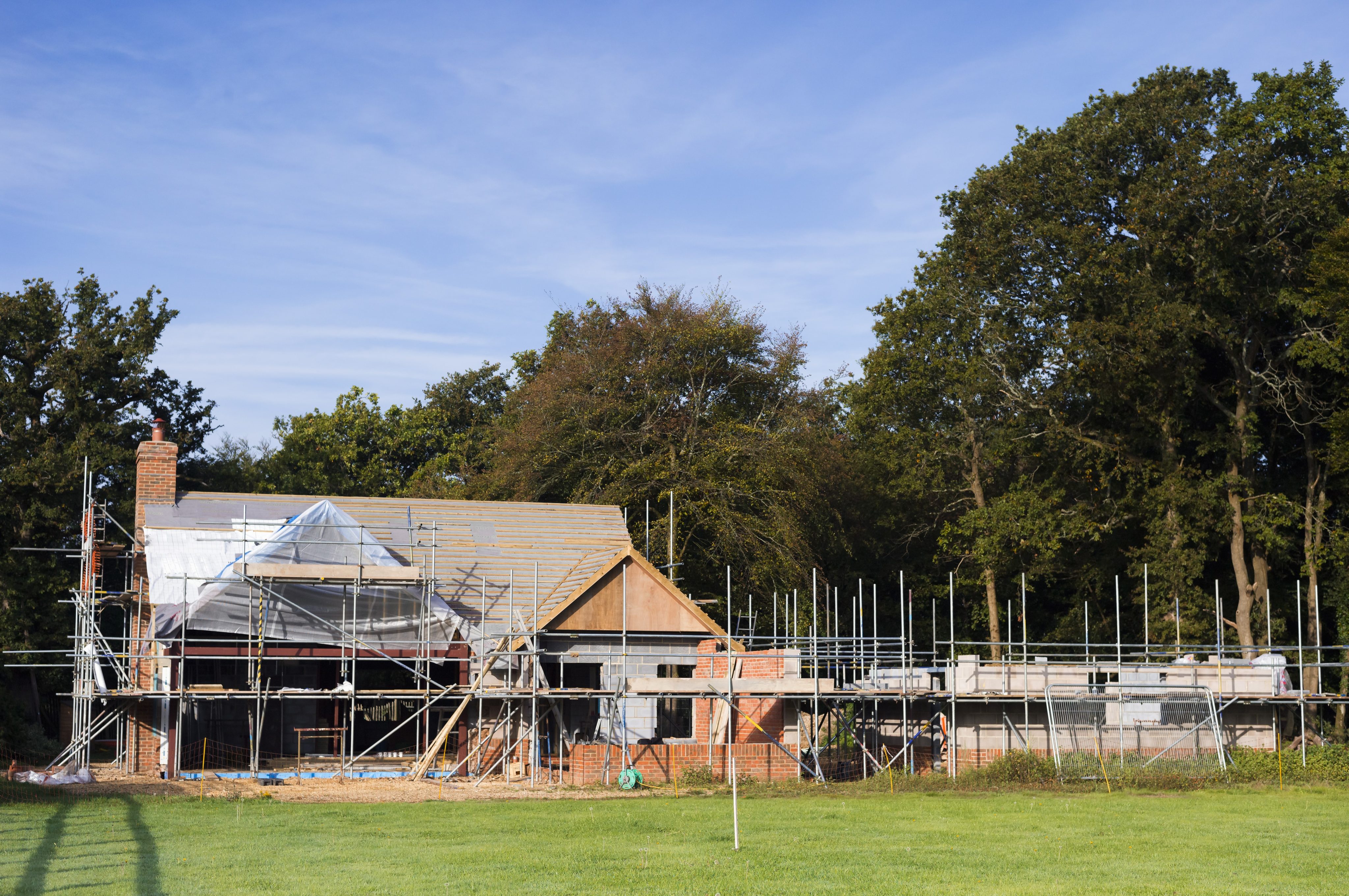
My mom flipped 35 houses before I finished high school, so I've spent a lot of time around homes that needed real work first. The FHA 203(k) finances the purchase price and renovation costs in a single mortgage.
Limited 203(k)
Up to $35,000 in non-structural repairs: paint, flooring, kitchen/bath refresh, doors and windows. No HUD consultant required. Faster and simpler.
Standard 203(k)
Larger, structural projects: additions, major electrical/plumbing, full gut jobs. No cap beyond your county's FHA limit. Requires a HUD-approved consultant.
How the Process Works
- Prequalify with a lender experienced specifically in 203(k) loans, like One Real Mortgage.
- Find a licensed contractor experienced with 203(k) projects (you can't DIY this).
- Contractor submits detailed bids and a renovation plan.
- A special appraisal values the home as-is and after improvements.
- Close like a normal mortgage; renovation funds go into escrow.
- Contractor gets paid in draws as each phase is inspected and completed.
- Work starts within 30 days, wraps in 6–12 months depending on scope.
Trade-offs: closing often takes 60+ days, rates run slightly higher, and lenders may require a contingency reserve up to 20% of the renovation budget. Primary residences only.
Other FHA Buyer Challenges
Many condos and HOA communities aren't FHA-approved, and HUD maintains a database to check. I once picked up a client who'd fired their previous agent after touring the same condo three times, only to learn it wasn't FHA-eligible at all. It got worse: the listing agent representing the seller hadn't caught it either. The seller lost 18 days off market, the buyer paid for an inspection and appraisal that went nowhere, and once the ineligibility surfaced and the listing went back up, buyers assumed something was wrong with the home, forcing a price cut that had nothing to do with the property itself. Confirm FHA eligibility before you tour a condo more than once, not after.
An FHA offer is usually a losing hand in a bidding war, even when it's technically the highest number on paper. Say a seller gets a cash offer at asking, a conventional offer $5,000 over, and an FHA offer $8,000 over. As the listing agent, I'd tell my seller to eliminate the FHA offer first: cash removes appraisal risk entirely, conventional avoids FHA's stricter condition standards, and if the FHA offer doesn't appraise high enough and the buyer can't cover the gap in cash, the deal simply dies.
That said, structure can still win. I once nearly took a multiple-offer situation with an FHA buyer by offering an extended closing date that let the sellers skip months in a short-term rental while their new construction finished. A cash offer beat us anyway, even at about $2,000 less net value to the seller, because five months is a long window for a financed deal to fall apart.
Sellers can specify what financing they'll accept, and some listings state "no FHA" outright. Usually it's one of two reasons: the listing agent doesn't understand FHA and is working off assumptions from 20 years ago, or the seller already knows the home won't pass an FHA appraisal and isn't willing to fix what's needed to get there.

FHA works best when your Pittsburgh agent and your lender are actually talking to each other. That's the whole idea behind how we work: real estate, mortgage, and title, all coordinated, so nothing falls through the cracks between an offer and a closing table.
Frequently Asked Questions
What credit score do I need for an FHA loan in Pittsburgh?
As low as 500 with a 10% down payment. At 580+, your down payment drops to 3.5% and you become eligible for most down payment assistance programs.
Can I buy a condo in Pittsburgh with an FHA loan?
Only if the condo or HOA community is on HUD's list of FHA-approved properties. Many Pittsburgh-area buildings aren't approved, so confirm this before writing an offer.
What's the difference between FHA and conventional loans?
FHA allows lower credit scores and smaller down payments but requires mortgage insurance in most cases for the life of the loan. Conventional loans need stronger credit but drop mortgage insurance at 20% equity.
Can I use an FHA loan to buy a fixer-upper?
Yes, through the FHA 203(k) loan, which finances the purchase price and renovation costs in a single mortgage. Limited 203(k) covers up to $35,000 in non-structural repairs; Standard 203(k) covers larger structural work.
What Are You Still Here For? Get Moving.
Even if you're a year or two out from being ready to move forward with buying a home, now is the time to talk and create a plan. Most agents only want to talk to people ready to go now. We want to help you whether you're ready now or in two years.
Ready To Start
- Let's talk about your goals, wants, and needs.
- We'll explain the process, what to expect (the good, the bad, the ugly, and the jumping up and down for joy excitement).
- Get you started with pre-approval.
- Get you signed up for home search alerts.
Getting Ready But Not There Yet
- Most new buyers finally start only to realize they missed some stuff, and that's why it's great to just have a nice informal chat about your goals.
- We can help set expectations for what you'll need to save, plus tips and tricks on how to save.
- Answer any questions.
- We'll keep in touch. Not blow you up every five minutes with spam emails and calls, but thoughtful check-ins and the occasional bit of information that might be of value.
But Wait, There's More. We'll Give You Some TLC.
TLC? Tony (Senior Loan Officer), Loans and info, and Craig (Seasoned Real Estate Professional), and you get the TLC treatment. You could just call another agent who doesn't know nothing about loans and may not really know much about real estate, or talk to us instead.

The Knox Team
Pittsburgh Real Estate | Real Broker
412-663-3325 | [email protected]
knoxknowshomes.com | @knoxknowshomes